
Osteoarthritis: Moving Through Pain — The Evidence for Exercise
The instinct to rest an arthritic joint is understandable but wrong. Controlled movement is the most effective treatment for osteoarthritis. Here's why, and how Praan Health coaches design programs for patients with joint pain.
Osteoarthritis affects over 180 million Indians, making it one of the most prevalent chronic conditions in the country. The knee is the most commonly affected joint, followed by the hip and spine. For most patients, the standard advice is rest, pain medication, and eventual joint replacement surgery. This approach is incomplete at best, and harmful at worst.
Why Rest Makes Osteoarthritis Worse
Articular cartilage — the smooth tissue covering joint surfaces — has no blood supply. It receives its nutrition through synovial fluid, which is pumped into the cartilage by the mechanical compression of movement. When a joint is immobilised, cartilage nutrition is impaired, and the cartilage begins to degrade.
Muscle weakness is both a cause and consequence of osteoarthritis. Weak muscles cannot adequately absorb the forces transmitted through joints, increasing the mechanical stress on cartilage. Immobility accelerates muscle atrophy, creating a vicious cycle of weakness, increased joint stress, pain, and further immobility.
The Evidence for Exercise
A 2015 Cochrane systematic review of 54 randomised controlled trials found that exercise significantly reduces pain and improves physical function in knee osteoarthritis. The effects are comparable to those of NSAIDs (non-steroidal anti-inflammatory drugs) — without the gastrointestinal and cardiovascular side effects that make long-term NSAID use problematic in elderly patients.
The most effective exercise programs combine:
- •Strengthening exercises: Quadriceps strengthening is particularly important for knee OA, as the quadriceps is the primary shock absorber for the knee joint
- •Aerobic exercise: Low-impact activities (swimming, cycling, walking) improve cardiovascular fitness without excessive joint loading
- •Range of motion exercises: Maintaining joint flexibility reduces stiffness and improves function
Pain Is Not the Enemy
One of the most important things a PHA coach communicates to patients with osteoarthritis is that pain during exercise does not mean damage is occurring. The distinction between "good pain" (muscle fatigue, mild joint aching that resolves within 24 hours) and "bad pain" (sharp, persistent pain that worsens with activity) is critical.
Patients who learn to exercise through mild discomfort — with the guidance and reassurance of a trained coach — consistently report better outcomes than those who avoid all painful activities.
The Praan Health Approach
PHA coaches design progressive exercise programs that start at the patient's current functional level and systematically increase challenge over time. They use pain monitoring scales (the 0–10 NRS) to guide exercise intensity, and coordinate with the patient's orthopaedic surgeon or rheumatologist when needed. The goal is to delay or avoid joint replacement surgery by building the muscle strength and movement patterns that protect the joint.
References & Further Reading
- [1]Fransen M et al. Exercise for osteoarthritis of the knee: a Cochrane systematic review. Br J Sports Med. 2015;49(24):1554-7.
- [2]Bennell KL, Hinman RS. A review of the clinical evidence for exercise in osteoarthritis of the hip and knee. J Sci Med Sport. 2011;14(1):4-9.
Category
Learn This in 21 Days
Everything in this article is taught in depth during the PHA certification program.
Enroll Free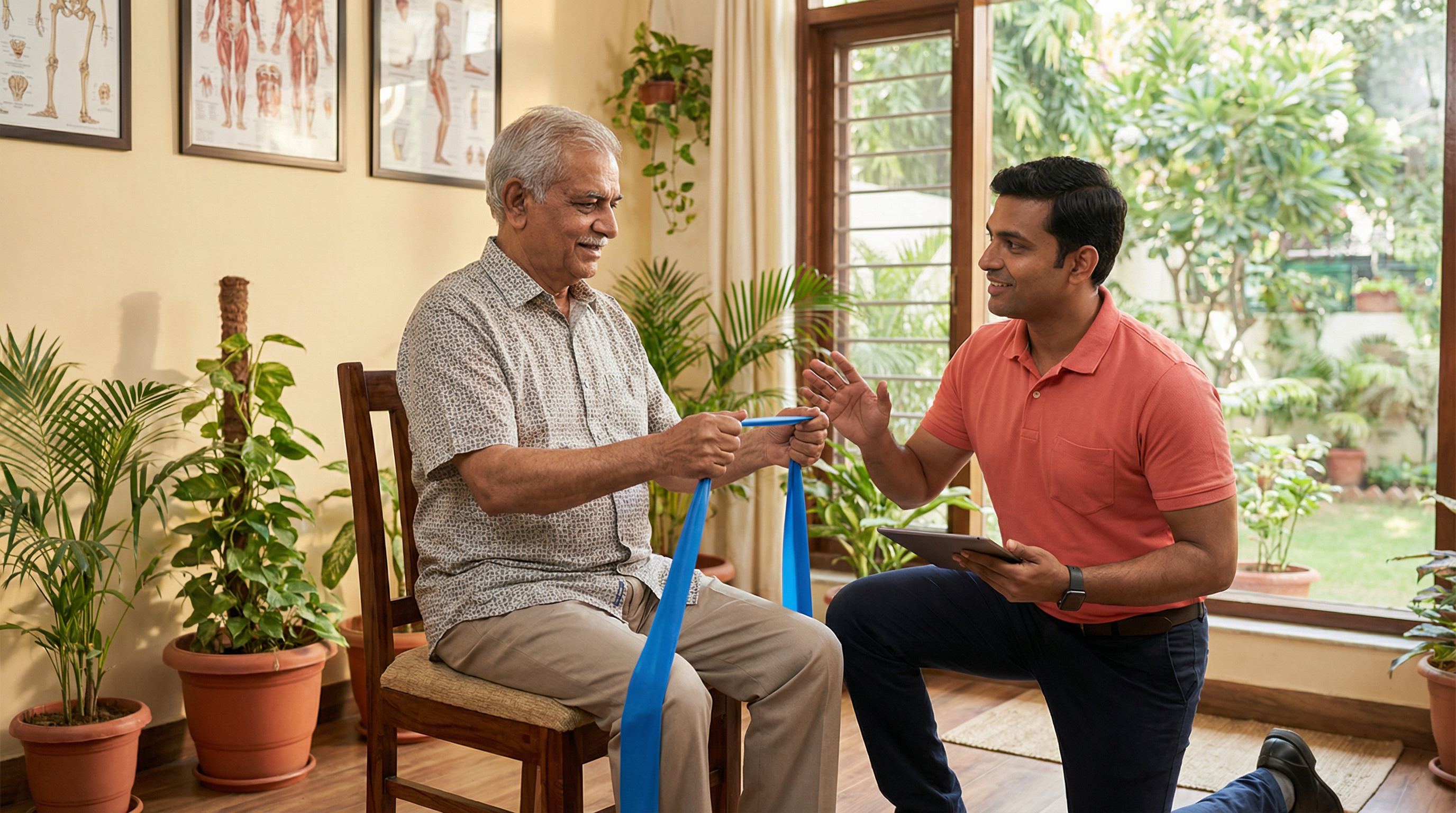

Ready to Apply This Knowledge?
The PHA 21-day certification teaches you to apply evidence-based senior healthcare with real patients.