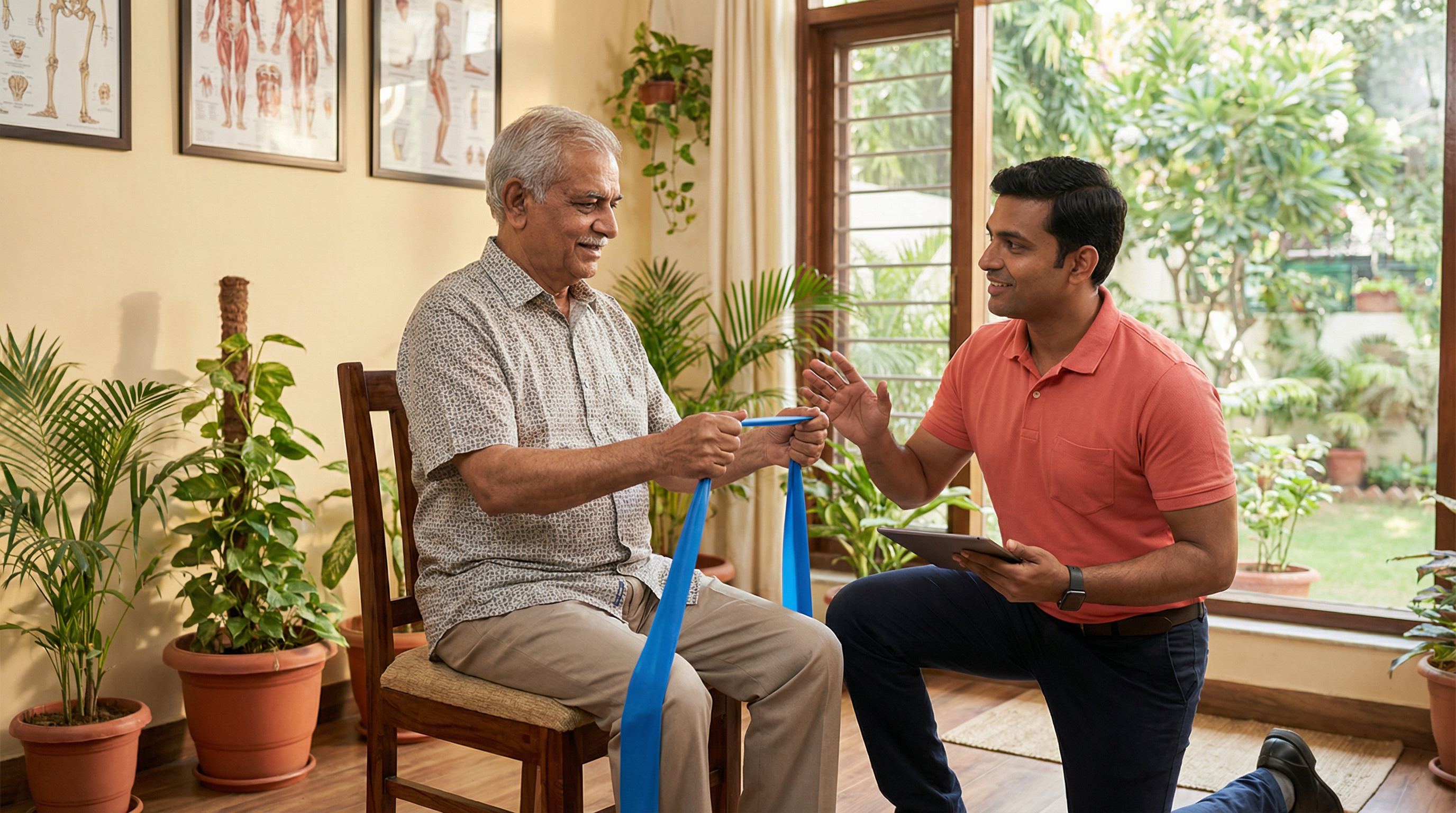
Managing Type 2 Diabetes in Seniors: Beyond Medication
75% of elderly Indians have at least one chronic condition. Diabetes is the most common. Here's how structured exercise and nutrition coaching — not just medication — can reverse insulin resistance and restore quality of life.
Type 2 Diabetes affects over 77 million Indians — and the prevalence is highest in the elderly population. For most patients, the standard of care is medication management: metformin, insulin, and regular HbA1c monitoring. But this approach treats the symptom, not the cause.
The Root Cause: Insulin Resistance
Type 2 Diabetes is fundamentally a disease of insulin resistance — cells that have become less responsive to insulin signals. The pancreas compensates by producing more insulin, but eventually it cannot keep up, and blood glucose rises.
The key insight: insulin resistance is not irreversible. It is a metabolic state that can be significantly improved — and in many cases reversed — through lifestyle intervention. The Diabetes Prevention Program, a landmark US trial, found that lifestyle intervention reduced the progression from prediabetes to diabetes by 58% — more than twice the effect of metformin.
How Exercise Improves Insulin Sensitivity
Muscle is the largest glucose-consuming organ in the body. When muscle contracts during exercise, it takes up glucose independently of insulin — through a separate pathway involving GLUT4 transporters. This effect persists for 24–48 hours after exercise, explaining why regular exercise has a sustained impact on blood glucose control.
Resistance training is particularly powerful because it increases muscle mass, creating more glucose-consuming tissue. Studies consistently show HbA1c reductions of 0.5–1.5% with structured exercise programs — comparable to many oral medications, and without the side effects.
Aerobic exercise and resistance training have complementary mechanisms and should ideally be combined. The American Diabetes Association recommends at least 150 minutes of moderate aerobic activity plus 2–3 sessions of resistance training per week for people with Type 2 Diabetes.
The Nutrition Component
Carbohydrate quality matters more than quantity. Replacing refined carbohydrates (white rice, maida, sugar) with complex carbohydrates (millets, legumes, vegetables) reduces post-meal glucose spikes. The glycaemic index of a meal can be significantly reduced by adding protein, fat, and fibre — all of which slow gastric emptying and blunt the glycaemic response.
For elderly Indians, practical strategies include: replacing white rice with millets (ragi, jowar, bajra) or adding dal to every meal, choosing whole fruit over juice, and including a source of protein (eggs, paneer, dal, curd) at every meal.
Monitoring and Safety
Exercise can cause hypoglycaemia in patients on insulin or sulphonylureas. PHA coaches are trained to monitor blood glucose before, during, and after exercise sessions, recognise the signs of hypoglycaemia, and adjust exercise intensity based on glucose readings. This clinical competence is what distinguishes a PHA coach from a generic fitness trainer.
What a Praan Health Coach Does
PHA coaches work alongside the patient's physician to design an integrated exercise and nutrition program. They monitor glucose responses to exercise, adjust intensity based on readings, and educate patients on the relationship between lifestyle and blood sugar — creating genuine understanding, not just compliance. Over time, many patients reduce their medication requirements under physician supervision.
References & Further Reading
- [1]Colberg SR et al. Physical activity/exercise and diabetes: a position statement of the American Diabetes Association. Diabetes Care. 2016;39(11):2065-79.
- [2]Umpierre D et al. Physical activity advice only or structured exercise training and association with HbA1c levels in type 2 diabetes. JAMA. 2011;305(17):1790-9.
- [3]International Diabetes Federation. IDF Diabetes Atlas, 10th edition. 2021.
Category
Learn This in 21 Days
Everything in this article is taught in depth during the PHA certification program.
Enroll Free
Ready to Apply This Knowledge?
The PHA 21-day certification teaches you to apply evidence-based senior healthcare with real patients.