Sarcopenia: Why Your Parents Are Getting Weaker — And What to Do About It
After age 30, the body loses 3–5% of muscle mass per decade. By 70, most people have lost 30–40% of their peak strength. Here's the science behind sarcopenia and why resistance training is the only real solution.
Sarcopenia — from the Greek for "poverty of flesh" — is the age-related loss of muscle mass, strength, and function. It is one of the most consequential physiological changes in aging, yet it remains dramatically underdiagnosed and undertreated in India.
What Happens at the Cellular Level
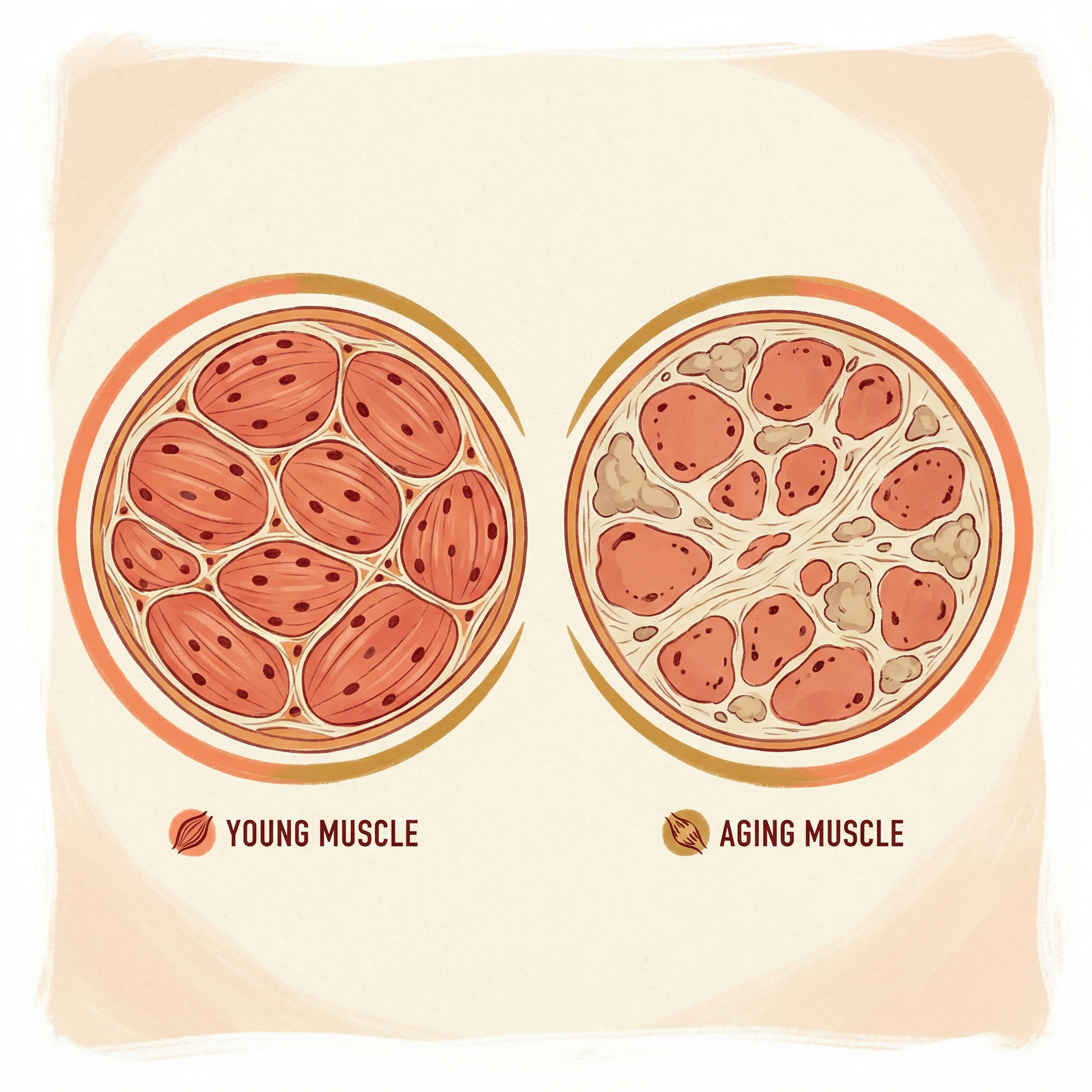
After age 30, the body begins losing Type II (fast-twitch) muscle fibres at an accelerating rate. These are the fibres responsible for power, speed, and reaction — the exact qualities needed to catch yourself when you trip, to stand up from a chair without help, or to carry groceries up stairs.
By age 70, most sedentary individuals have lost 30–40% of their peak muscle mass. The loss is not uniform — it preferentially affects the legs, hips, and core, the very muscles needed for independent mobility.
The cellular mechanisms are well understood. Satellite cells — the stem cells responsible for muscle repair and growth — become less responsive with age. Anabolic hormones (testosterone, IGF-1, growth hormone) decline. Chronic low-grade inflammation (inflammaging) accelerates protein breakdown. Mitochondrial dysfunction reduces the energy available for muscle contraction and repair.
Why It Matters Beyond Appearance
Sarcopenia is not just about looking thin or frail. It is directly linked to:
- •Falls and fractures (the leading cause of injury-related death in seniors)
- •Insulin resistance and Type 2 Diabetes (muscle is the primary site of glucose disposal)
- •Increased hospitalisation risk and longer recovery times
- •Loss of independence and quality of life
- •Increased all-cause mortality
A landmark study in the Journal of the American Medical Association found that grip strength — a simple proxy for overall muscle mass — was a stronger predictor of mortality than blood pressure in middle-aged adults.
The Indian Context
India's elderly population is particularly vulnerable. The traditional Indian diet, while rich in vegetables and legumes, is often low in high-quality protein. Vegetarian diets can meet protein needs, but require careful planning that most elderly Indians do not receive. Combined with low physical activity levels and high rates of vitamin D deficiency (which impairs muscle function), sarcopenia is a silent epidemic in Indian seniors.
The Only Real Solution: Resistance Training
The scientific evidence is unambiguous: progressive resistance training is the most effective intervention for sarcopenia. Studies have shown muscle hypertrophy (growth) is possible even in nonagenarians — people in their 90s.
The key word is progressive. A Praan Health coach designs a program that starts where the patient is and systematically increases load over time, stimulating the muscle-building response without injury risk.
Aerobic exercise alone is insufficient. Walking, swimming, and cycling improve cardiovascular fitness but do not adequately stimulate the muscle protein synthesis needed to reverse sarcopenia. Resistance training — using bodyweight, resistance bands, dumbbells, or machines — is essential.
Nutrition as the Other Half of the Equation
Protein intake is the dietary determinant of muscle mass. Seniors need 1.2–1.6g of protein per kg of body weight per day — significantly more than the standard 0.8g/kg recommendation designed for young adults. Protein distribution matters too: spreading intake across three meals (rather than concentrating it at dinner) optimises muscle protein synthesis.
Leucine — an amino acid found in dairy, eggs, meat, and legumes — is the key trigger for muscle protein synthesis. Ensuring adequate leucine at each meal is a practical target for PHA coaches working with elderly patients.
What Praan Health Coaches Do
PHA coaches are trained to assess sarcopenia using standardised tools (grip strength dynamometry, gait speed measurement, Short Physical Performance Battery), design individualised progressive resistance programs, monitor protein intake and provide practical dietary guidance, and track progress using objective markers over time.
This is not generic gym training — it is clinical exercise medicine, designed for the specific physiological needs of the aging body.
References & Further Reading
- [1]Cruz-Jentoft AJ et al. Sarcopenia: revised European consensus on definition and diagnosis. Age Ageing. 2019;48(1):16-31.
- [2]Landi F et al. Sarcopenia as a risk factor for falls in elderly individuals. J Nutr Health Aging. 2012;16(5):457-60.
- [3]Peterson MD et al. Resistance exercise for muscular strength in older adults: A meta-analysis. Ageing Res Rev. 2010;9(3):226-37.
Category
Learn This in 21 Days
Everything in this article is taught in depth during the PHA certification program.
Enroll Free
Ready to Apply This Knowledge?
The PHA 21-day certification teaches you to apply evidence-based senior healthcare with real patients.