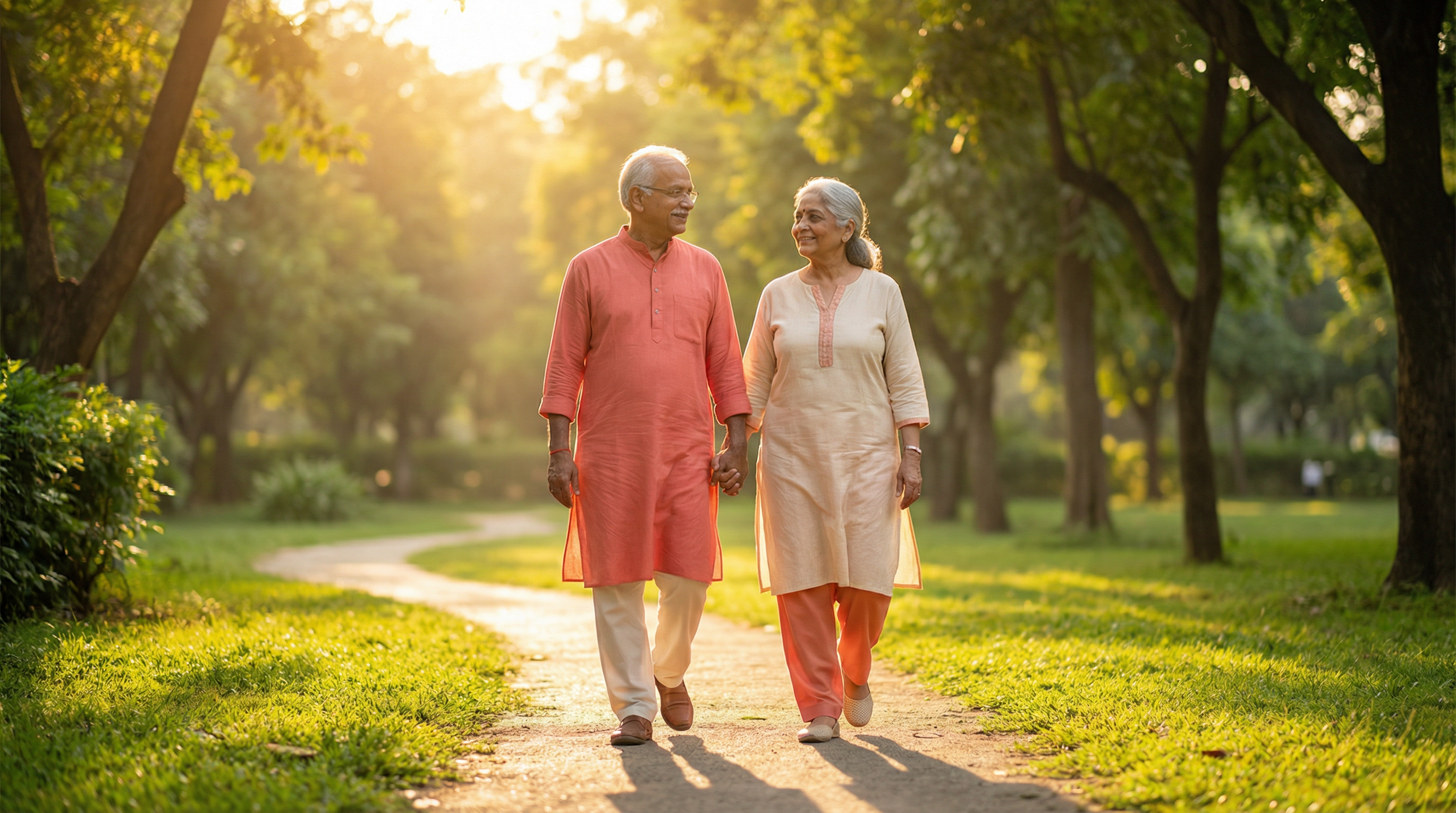
India's Elder Care Deficit: Why 194 Million Seniors Need You
India has 194 million elderly citizens and fewer than 5,000 trained geriatric specialists. The math is stark. Here's what this means for anyone considering a career in senior healthcare.
The numbers are not abstract. They represent real families — real parents and grandparents who need care that does not yet exist in India at the scale required.
The Demographic Reality
India has 194 million elderly citizens (aged 60 and above) as of 2023. This number will reach 340 million by 2050 — nearly the current population of the United States. India is aging faster than almost any other large country in history, driven by declining fertility rates and increasing life expectancy.
The Longitudinal Ageing Study in India (LASI) — the most comprehensive survey of elderly Indians ever conducted — found that 75% of elderly Indians have at least one chronic condition, 40% have two or more, and 20% have three or more. Diabetes, hypertension, arthritis, and respiratory disease are the most prevalent.
The Supply Gap
Against this backdrop of enormous need, India has:
- •Fewer than 5,000 trained geriatricians (doctors specialising in elderly care)
- •Almost no standardised training for geriatric strength and rehabilitation specialists
- •No national certification for senior healthcare coaches or health professionals
This is not a gap — it is a chasm. The ratio of geriatric specialists to elderly patients in India is approximately 1:40,000. In the United States, the ratio is approximately 1:2,500 — itself considered inadequate.
The Economic Opportunity
The elder care market in India was valued at ₹7,500 crore in 2022 and is projected to reach ₹1,00,000 crore by 2030 — a compound annual growth rate of over 30%. This growth is driven by:
- •Rising incomes and willingness to pay for quality care
- •Increasing nuclear family structures reducing informal family caregiving
- •Growing awareness of the importance of active aging and chronic disease management
- •Government policy attention to the elderly population
Why This Matters for Your Career
A career in senior healthcare is not just personally meaningful — it is economically rational. You are entering a market at the beginning of its growth curve, with almost no trained competition, in a sector that will only grow larger and more important over the next 30 years.
The PHA certification positions you at the frontier of this emerging profession. You will not be competing for jobs in a saturated market — you will be building a profession that does not yet exist in India at scale.
The Praan Health Mission
Praan Health Academy exists to create the senior healthcare specialists that India needs. Every coach we certify is a direct response to the deficit described above. Every family whose elderly parent receives skilled, evidence-based care is a family whose life has been changed.
This is the work. This is why it matters. And this is why, if you are considering a career in healthcare, senior healthcare is the most important choice you can make right now.
References & Further Reading
- [1]United Nations. World Population Ageing 2023. UN DESA, Population Division.
- [2]LASI India Report. Longitudinal Ageing Study in India, Wave 1. IIPS, 2020.
- [3]WHO. Ageing and Health. World Health Organization, 2022.
Category
Learn This in 21 Days
Everything in this article is taught in depth during the PHA certification program.
Enroll Free
Ready to Apply This Knowledge?
The PHA 21-day certification teaches you to apply evidence-based senior healthcare with real patients.