The Indian Diet and Aging: Adapting Traditional Eating for Longevity
The traditional Indian diet is rich in anti-inflammatory spices, legumes, and vegetables — but also high in refined carbohydrates. Here's how to help elderly patients adapt their diet without abandoning their food culture.
Indian food culture is deeply intertwined with identity, family, and ritual. For elderly patients, food is not just nutrition — it is memory, comfort, and connection. Any dietary intervention that ignores this cultural dimension is unlikely to succeed.
The good news is that the traditional Indian diet, in its original form, is remarkably well-suited for healthy aging. The challenge is that the modern Indian diet has drifted significantly from its traditional roots — and this drift is driving the epidemic of chronic disease in elderly Indians.
The Strengths of the Traditional Indian Diet
The traditional Indian diet has several features that align well with longevity research:
- •Legumes at every meal: Dal, rajma, chana, and other legumes provide protein, fibre, and resistant starch — all of which support gut health, glycaemic control, and satiety
- •Anti-inflammatory spices: Turmeric (curcumin), ginger, garlic, and black pepper have well-documented anti-inflammatory properties
- •Fermented foods: Idli, dosa, curd, and kanji provide probiotics that support gut microbiome health
- •Seasonal vegetables: Traditional Indian cooking emphasises vegetables — a source of fibre, vitamins, and phytonutrients
- •Moderate fat intake: Traditional cooking used ghee and coconut oil in moderate quantities — both of which have been partially rehabilitated by recent research
The Problems with the Modern Indian Diet
The modern Indian diet has several features that accelerate aging and chronic disease:
- •Excess refined carbohydrates: White rice, maida (refined wheat flour), and sugar have displaced more nutritious alternatives
- •Reduced protein intake: As incomes have risen, the proportion of calories from protein has paradoxically fallen in many households
- •Increased ultra-processed food consumption: Packaged snacks, sweetened beverages, and fast food have become dietary staples
- •Reduced fibre intake: Polished grains and reduced vegetable consumption have dramatically reduced fibre intake
Practical Strategies for Adaptation
The goal is not to replace Indian food with a Western diet — it is to restore the traditional Indian diet's nutritional strengths while addressing its modern weaknesses:
- •Replace white rice with millets: Ragi (finger millet), jowar (sorghum), and bajra (pearl millet) have lower glycaemic indices and higher protein and fibre content
- •Add protein to every meal: Ensure dal, curd, paneer, or eggs are present at every meal
- •Reduce maida: Replace maida with whole wheat atta, ragi flour, or besan (chickpea flour) in rotis and snacks
- •Increase vegetable variety: Aim for at least 3–4 different vegetables per day, including leafy greens
- •Restore traditional fermented foods: Curd, buttermilk, and fermented rice preparations support gut health
The Role of Praan Health Coaches
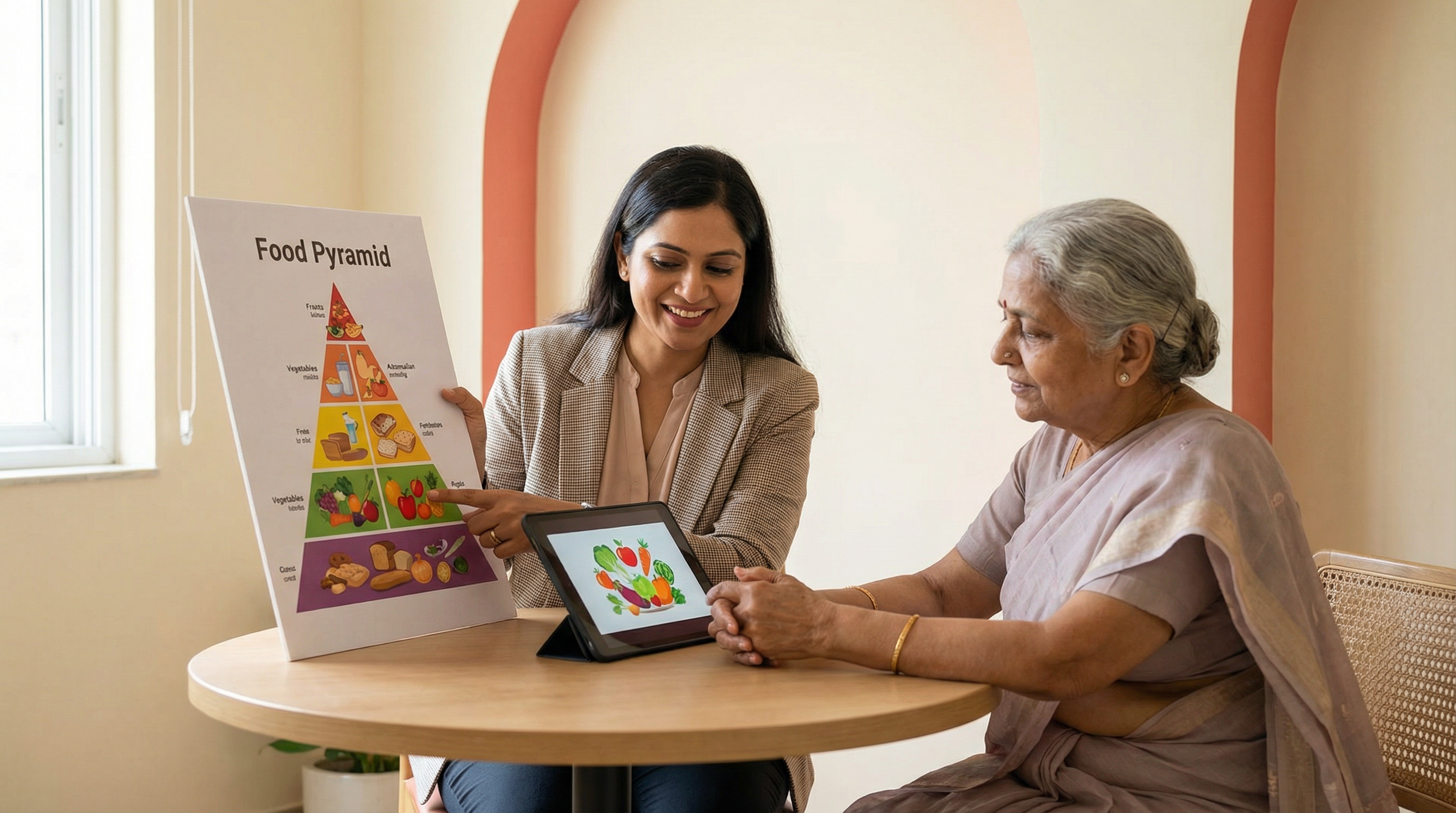
PHA coaches are trained in culturally sensitive dietary counselling. They work with patients' existing food preferences and cooking traditions, making targeted modifications rather than wholesale dietary overhauls. This approach is more effective, more sustainable, and more respectful of the patient's identity and autonomy.
References & Further Reading
- [1]Misra A et al. Nutrition transition in India: secular trends in dietary intake and their relationship to diet-related non-communicable diseases. J Diabetes. 2011;3(4):278-92.
- [2]Willett WC et al. Food in the Anthropocene: the EAT-Lancet Commission on healthy diets from sustainable food systems. Lancet. 2019;393(10170):447-92.
Category
Learn This in 21 Days
Everything in this article is taught in depth during the PHA certification program.
Enroll FreeRelated Articles
Ready to Apply This Knowledge?
The PHA 21-day certification teaches you to apply evidence-based senior healthcare with real patients.